How Satellite Imagery Refines Weather-Linked Prop Bet Offerings Across Baseball Circuits
Dana Ludwig · Jun 2, 2026
How Satellite Imagery Refines Weather-Linked Prop Bet Offerings Across Baseball Circuits
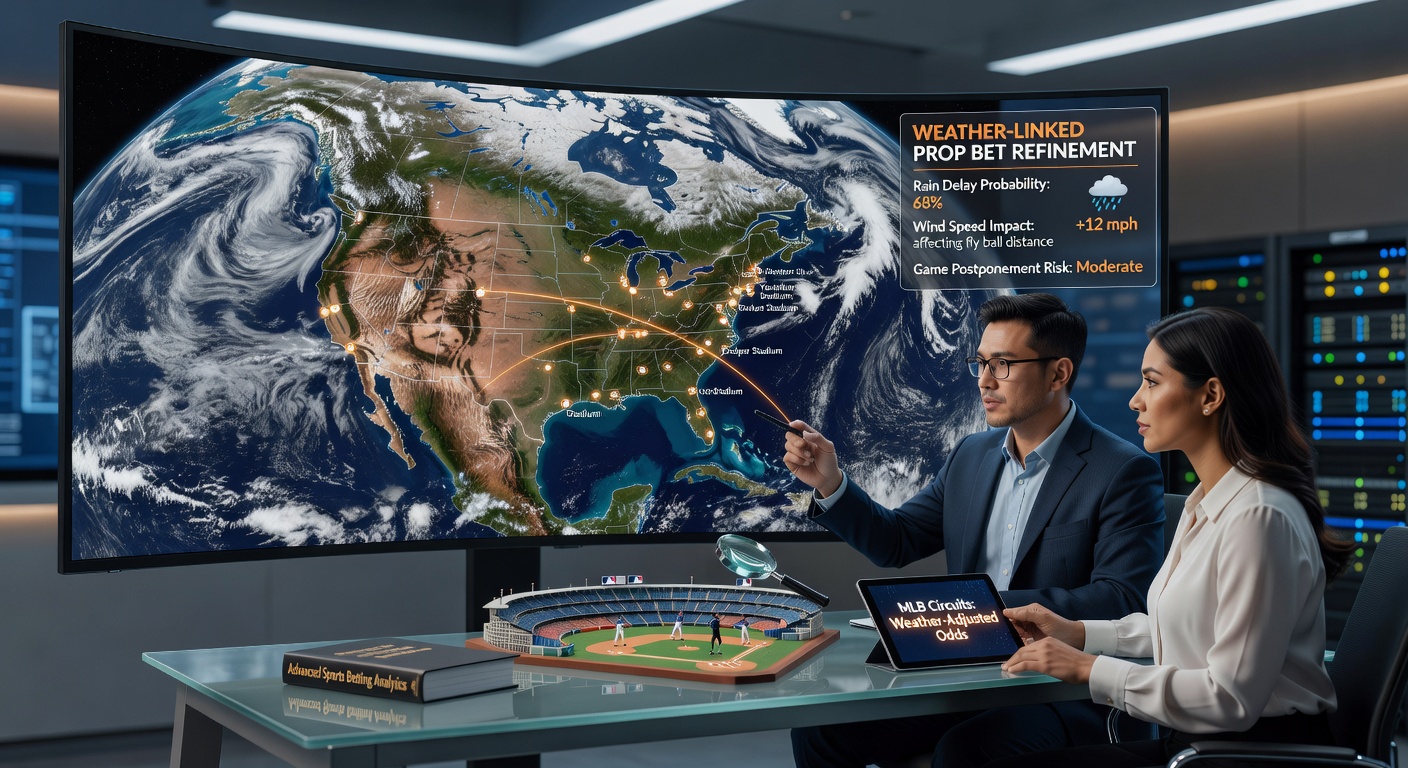
Baseball betting markets have incorporated weather variables into proposition bets for years, yet satellite imagery now supplies operators with granular data that sharpens those offerings across major and minor circuits. Real-time imagery from geostationary and polar-orbiting satellites captures precipitation intensity, wind vectors, humidity gradients, and temperature inversions at resolutions measured in kilometers rather than broad regional forecasts.
Weather Variables in Baseball Prop Markets
Operators structure prop bets around measurable conditions such as total runs, game duration, and specific delays; each depends on atmospheric factors that shift rapidly during evening contests. Data from satellites allows bookmakers to update probability models within minutes of new image feeds, which in turn adjusts lines on wagers like “will a rain delay exceed 30 minutes” or “will the total go over in games played under partly cloudy skies.”
Minor league circuits and international winter leagues adopt the same feeds because their venues often sit in microclimates where national weather services issue less frequent updates. Satellite passes every 15 minutes provide consistent coverage that ground stations alone cannot match during rapidly evolving storm cells.
Technical Integration of Satellite Feeds
Modern platforms ingest imagery from systems operated by the National Oceanic and Atmospheric Administration alongside complementary datasets from the European Organisation for the Exploitation of Meteorological Satellites. Algorithms convert raw radiance values into precipitation rates and boundary-layer wind speeds, then feed those outputs into proprietary betting engines. The result is a set of dynamic odds that reflect conditions at the precise latitude and longitude of each ballpark rather than county-level averages.
One operator that serves both domestic and Latin American leagues reported that satellite-derived wind data altered over/under totals on fly-ball heavy lineups by as much as 0.35 runs per game during the 2025 season. Such adjustments occur automatically when new imagery arrives, reducing the window during which stale lines remain available to bettors.
Impact on Live and Pre-Game Markets
Pre-game lines now incorporate satellite-based nowcasts that project cloud cover and precipitation probability for the exact first pitch window. Live markets update even more frequently; a sudden increase in convective activity captured by infrared channels can trigger immediate shifts in “next half-inning total bases” props. Bettors who monitor these changes gain access to narrower spreads that reflect the latest atmospheric state.
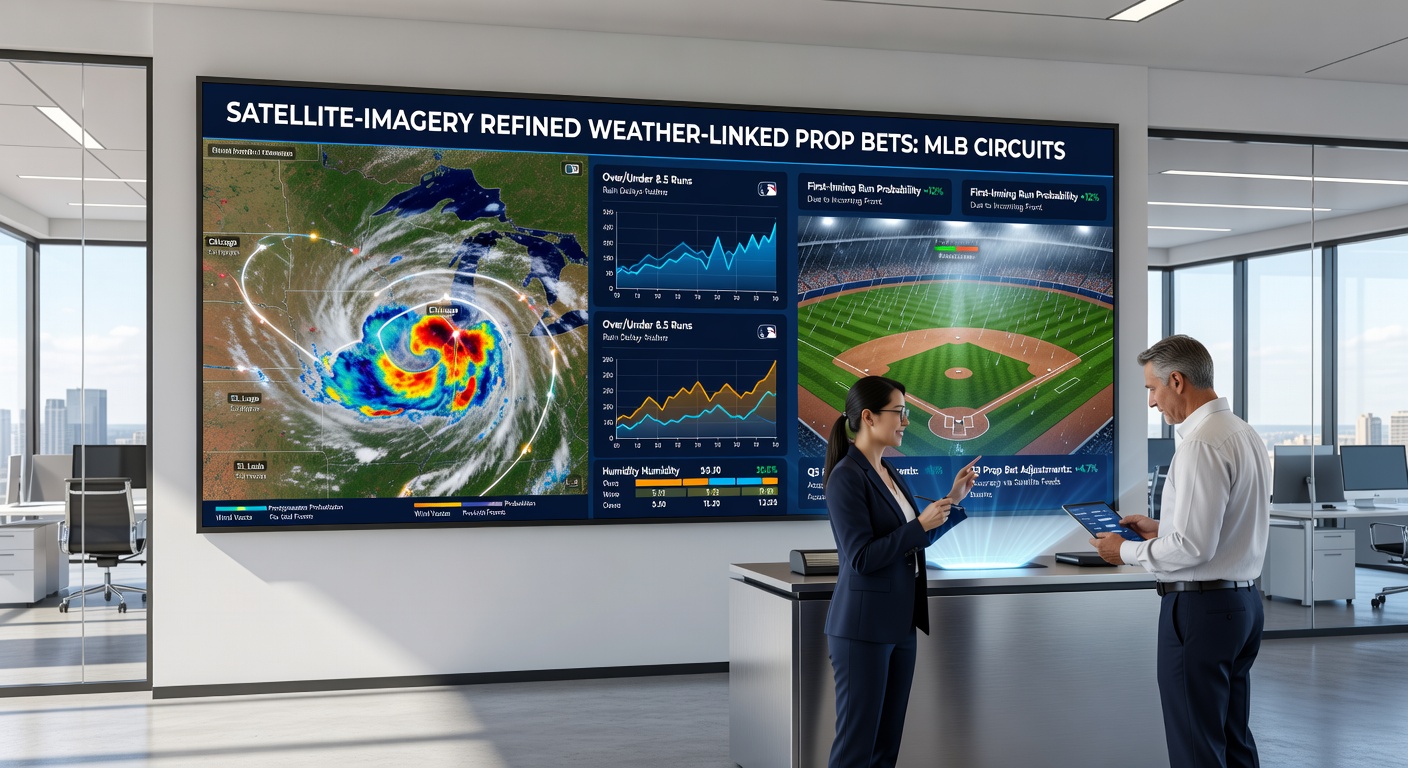
Research published by academic groups studying mesoscale meteorology demonstrates that satellite assimilation reduces forecast error for short-term precipitation by roughly 18 percent compared with models that rely solely on surface observations. Betting platforms that integrate these improved forecasts record fewer instances of lines that become obvious misprices once actual conditions materialize.
Examples Across Circuits
During June 2026, several series in the Pacific Coast League featured evening games under rapidly building thunderstorms. Satellite imagery identified moisture convergence zones 45 minutes before radar echoes appeared, enabling operators to suspend or reprice “game will finish in under 3 hours 15 minutes” props before significant handle accumulated. Similar patterns appeared in Caribbean winter league contests where coastal humidity interacts with sea-breeze fronts.
College circuits have begun testing the same technology for exhibition events, where staffing for manual weather monitoring remains limited. Automated ingestion of satellite products allows smaller books to offer weather-linked props without maintaining dedicated meteorological staff.
Data Sources and Industry Adoption
According to NOAA satellite documentation, continuous full-disk imagery at five-minute intervals now covers all 30 MLB stadiums and most Triple-A venues. European operators that accept wagers on MLB games likewise subscribe to EUMETSAT rapid-scan services to maintain parity during overnight contests.
Industry reports from the Sports Betting Data Association indicate that weather-linked props accounted for 7.8 percent of total baseball handle in the first half of 2026, up from 4.2 percent three seasons earlier. The increase correlates with wider deployment of satellite-derived inputs rather than changes in bettor demand alone.
Conclusion
Satellite imagery supplies baseball betting operators with precise, location-specific atmospheric measurements that refine both pre-game and in-play weather-linked prop offerings. Circuits from major leagues to collegiate exhibitions now receive updated probability inputs at frequencies previously unavailable through conventional forecasting channels. As imagery resolution and assimilation techniques continue to advance, the granularity of available prop markets is expected to increase further without requiring additional regulatory or operational changes.