Sentiment Tracking Tools Reshaping Live Odds Creation in Major Betting Operations
Sage Ludwig · Jun 4, 2026

Sentiment Tracking Tools Reshaping Live Odds Creation in Major Betting Operations
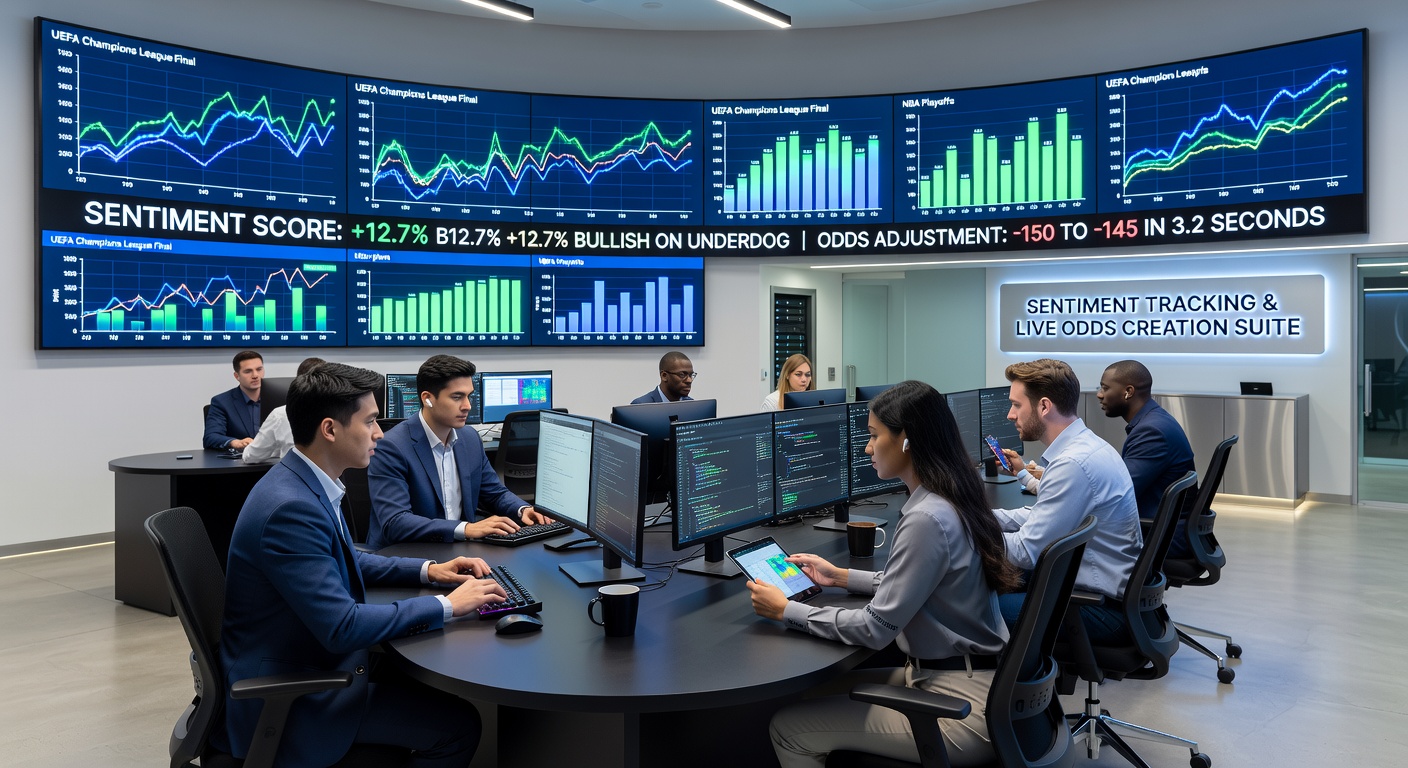
Betting operators have integrated sentiment tracking tools into their live odds systems, and these platforms pull data from social media feeds, news wires, and public forums to adjust prices during events. Research from industry reports shows that major sportsbooks began deploying these tools in 2024, with adoption rates climbing through the first half of 2026 as processing speeds improved. Data indicates that sentiment signals now influence adjustments on props and in-game markets within seconds of a spike in online conversation volume.
How Sentiment Analysis Feeds Live Markets
Algorithms scan millions of posts across platforms and assign scores based on tone, volume, and source credibility, then operators route those scores into pricing engines that recalibrate lines. Observers note that when positive sentiment surges around a player performance, the corresponding over markets tighten while under markets widen to balance exposure. Studies from academic groups have documented similar patterns in European football leagues, where a single viral moment can shift implied probabilities by several percentage points before the next play concludes.
Teams at large operators combine these signals with traditional statistical models, and the hybrid approach allows quicker responses than statistics alone permit. Figures released in quarterly updates reveal that operators using sentiment layers reduced variance in certain live segments during the 2025-2026 season. Those who've studied the workflow explain that natural language processing filters out bot activity first, then weights verified accounts more heavily to avoid noise from coordinated campaigns.
Integration Across Major Platforms
Leading operators in North America and Australia have embedded sentiment feeds into their core trading desks, and this setup lets traders override automated suggestions when human judgment conflicts with the data. Reports from regional regulators in New Jersey and Ontario show that licensed books must maintain audit trails for any odds movement tied to external data sources, including sentiment inputs. In June 2026, several firms expanded these capabilities to cover additional leagues after testing confirmed measurable improvements in hold percentages on live tennis and basketball markets.
One documented case involved a European operator that linked sentiment monitoring to weather-related props in baseball, allowing rapid repricing when forecasts shifted and public chatter reflected the change. Researchers at data analytics firms have published findings that correlate sentiment spikes with subsequent betting volume increases, though they emphasize the need for multi-source validation to limit false triggers.
Regulatory and Technical Considerations
Regulators in multiple jurisdictions require operators to disclose data sources used for odds formation, and sentiment tools fall under those reporting rules in states with active licensing regimes. According to documentation from the Nevada Gaming Control Board, firms must demonstrate that external signals do not introduce unfair advantages or manipulate market integrity. Technical teams address latency issues by deploying edge computing nodes closer to data centers, which cuts processing time and keeps adjustments synchronized with event feeds.
Industry associations have published guidelines on ethical use of public sentiment data, and these documents stress transparency with bettors about how prices form. Data from operator filings indicates that books using multi-layered sentiment inputs experienced fewer customer disputes over line movements in the opening months of 2026 compared with prior periods. Those monitoring compliance note that audit processes now include sample reviews of sentiment-driven changes to verify consistency with stated methodologies.
Market Impact and Adoption Trends
Market research groups tracking global betting volumes report that platforms with advanced sentiment capabilities captured increased share in live wagering segments during the 2025 calendar year. Figures show particular strength in soccer and American football, where narrative shifts around injuries or coaching decisions move quickly through online discussions. Operators have expanded coverage to include niche events such as lower-division matches once they confirmed the tools scaled without excessive false positives.
Academic papers examining data visualization in trading environments suggest that combining sentiment heat maps with traditional charts helps traders identify anomalies faster. One study released in early 2026 highlighted how dashboards displaying real-time sentiment alongside volume metrics improved decision accuracy in simulated environments. External sources such as the Australian Institute of Family Studies have examined broader effects of rapid odds changes on participant behavior, while reports from the National Council on Problem Gambling track related patterns across North American markets.
Conclusion
Sentiment tracking continues to evolve as a component of live odds systems, and operators refine the balance between automated signals and human oversight. Evidence from regulatory filings and academic reviews shows measurable integration across major betting operations by mid-2026, with ongoing work focused on accuracy and compliance. Those monitoring the sector expect further refinement as processing technology advances and data sources expand.